Temple Gallery
मंदिर गैलरी
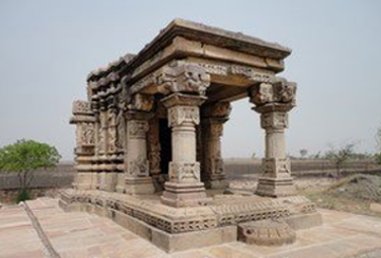
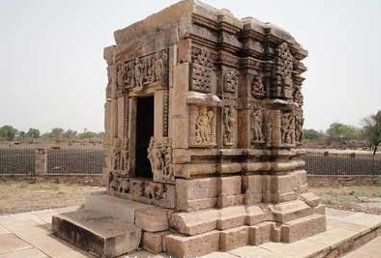
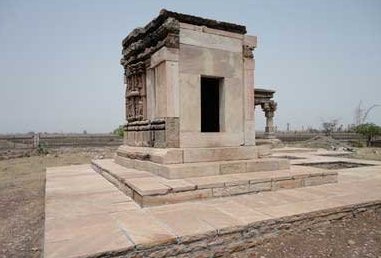
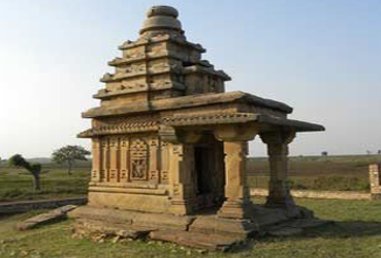
The Temple Survey Project Northern Region, Bhopal was established in 1955. Shri Krishna Deva was the first Superintending Archaeologist of this Project.
Explore TemplesPreserving India's Timeless Heritage with Passion
The Archaeological Survey of India (ASI), was established in 1861. It is the nodal agency of the Govt. of India for all archaeological researches in the country and protection of monuments of national importance. The maintenance of ancient monuments sites and remains of national importance is the prime concern of the ASI. It also regulates all archaeological activities in the country as per the provisions of the Ancient Monuments and Archaeological Sites and Remains Act, 1958 and as well as Antiquities and Art Treasure Act, 1972.
The Archaeological Survey of India (ASI), was established in 1861.The entire country is divided into 24 Circles for the maintenance of ancient monuments and archaeological sites and remains of national importance. The organization has a large work force of trained archaeologists, conservators, epigraphists, architects and scientists for conducting archaeological research projects through its Circles, Museums, Excavation Branches, Prehistory Branch, Epigraphy Branches, Science Branch, Horticulture Branch, Building Survey Project, Temple Survey Projects and Underwater Archaeology Wing
The Temple Survey Project Northern Region, Bhopal was established in 1955. Shri Krishna Deva was the first Superintending Archaeologist of this Project.Since its inception, the Temple Survey Project (N.R.), Bhopal has been intensivly involved in study of temples in the country and released various informative notes, books and many vital research papers. Scholars like Krishna Deva, B. L. Nagarch, R.D. Trivedi, Debala Mitra, M.D. Khare made extensive efforts for the documentation & analysis of the temples to enrich the knowledge of various important temples of northern India by their detailed study. Till today students of temple architecture are being benefitted by the works carried out by the scholars of TSP (NR).
In general a basic temple is comprised of a square garbhagraha and a mandapa in front. An
antarala connects the garbhagraha to the mandapa. In the beginning the temple was very
simple in terms of its plan and elevation, having a square garbhagraha with a flat
roof.Various projections were provided to high sikhara especially in North Indian temples.
The temple in India is broadly divided into the following three styles :
1. Nagara Style (North Indian Style)
2. Dravidian Style (South Indian Style)
3. Vesara Style